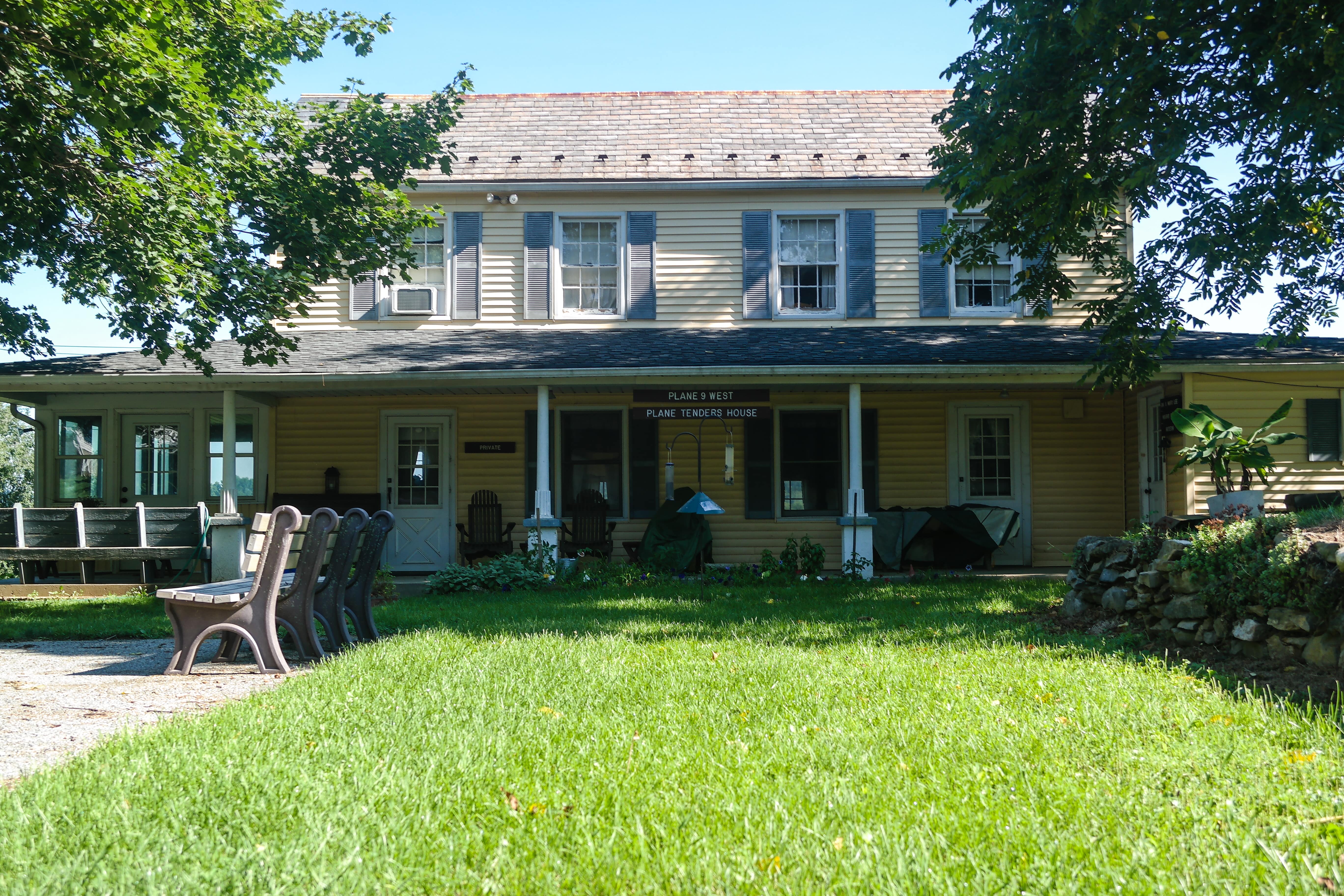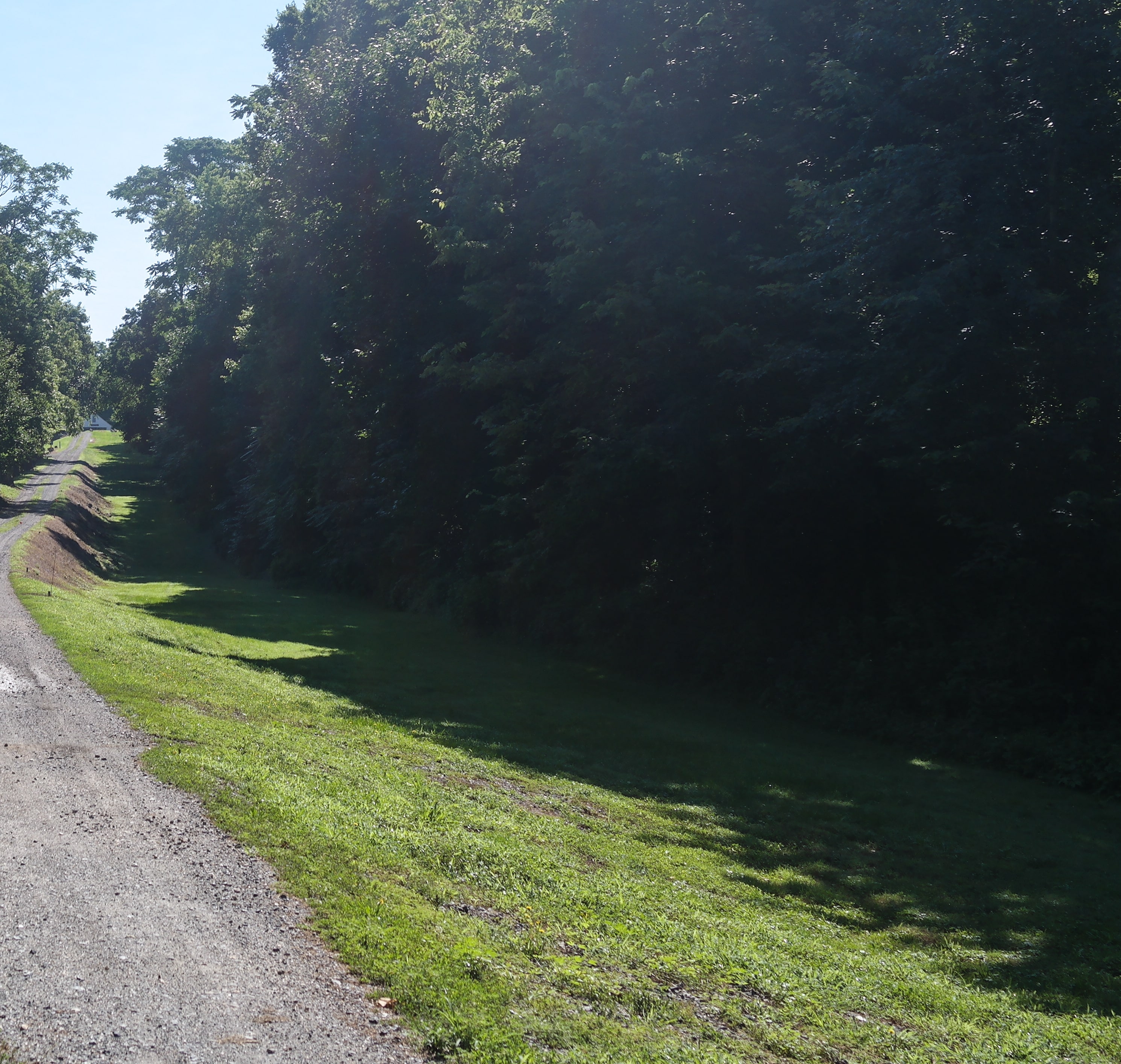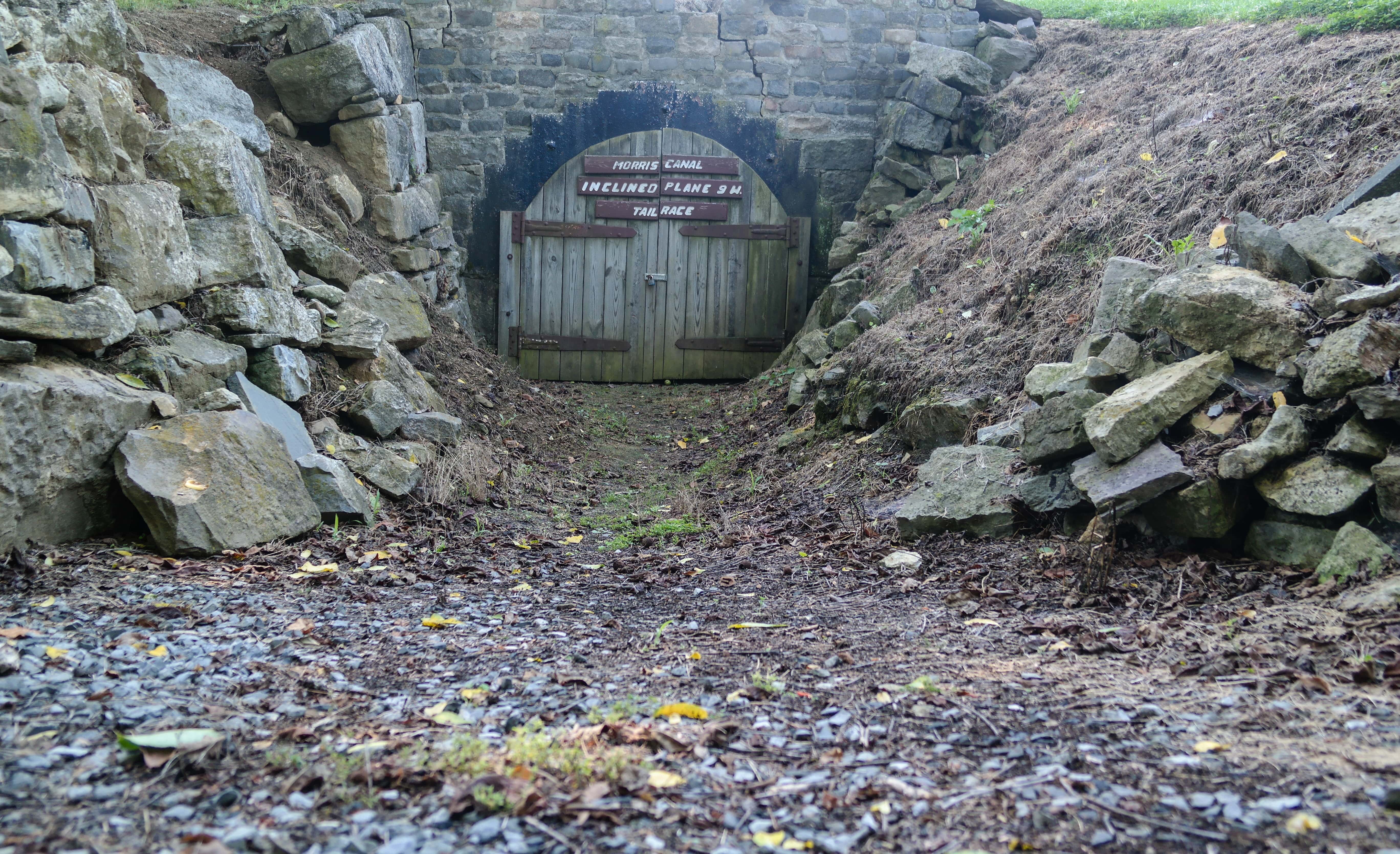
At the top of Plane 9 West canal boats would be pulled into and out of the upper level of the canal. The waters of the canal flowed westerly from Lake Hopatcong by gravity through planes and locks to the head race flume.
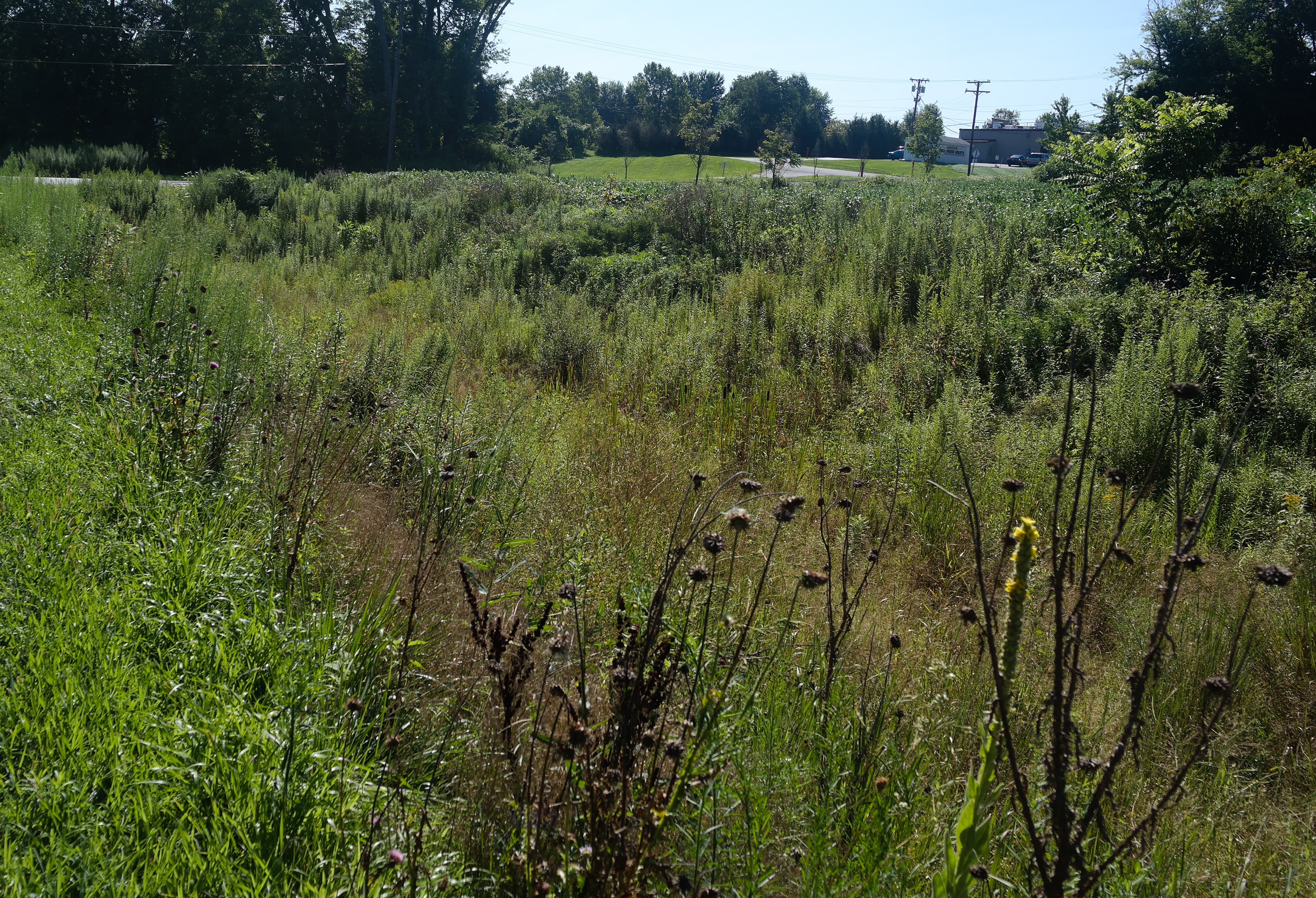
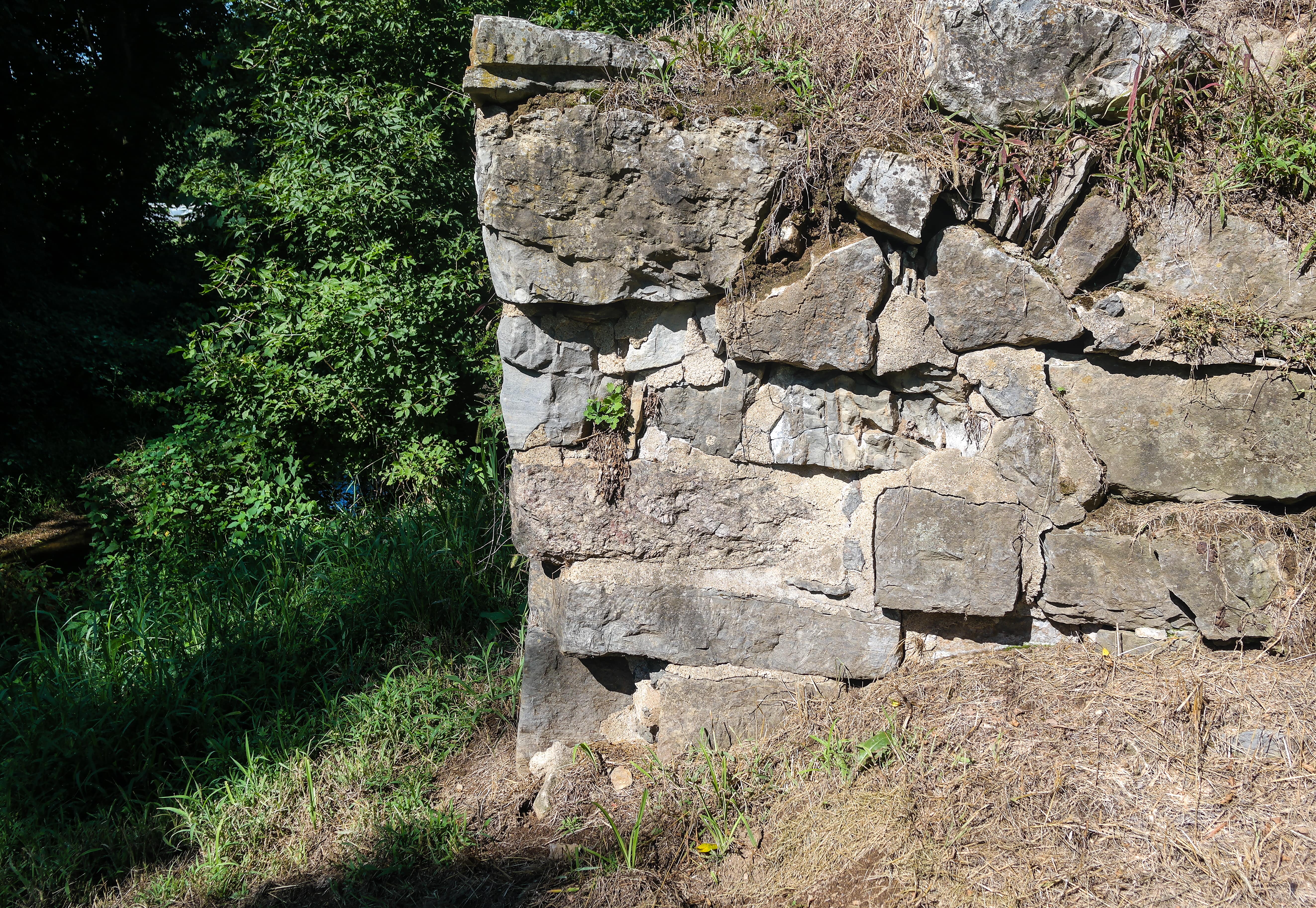
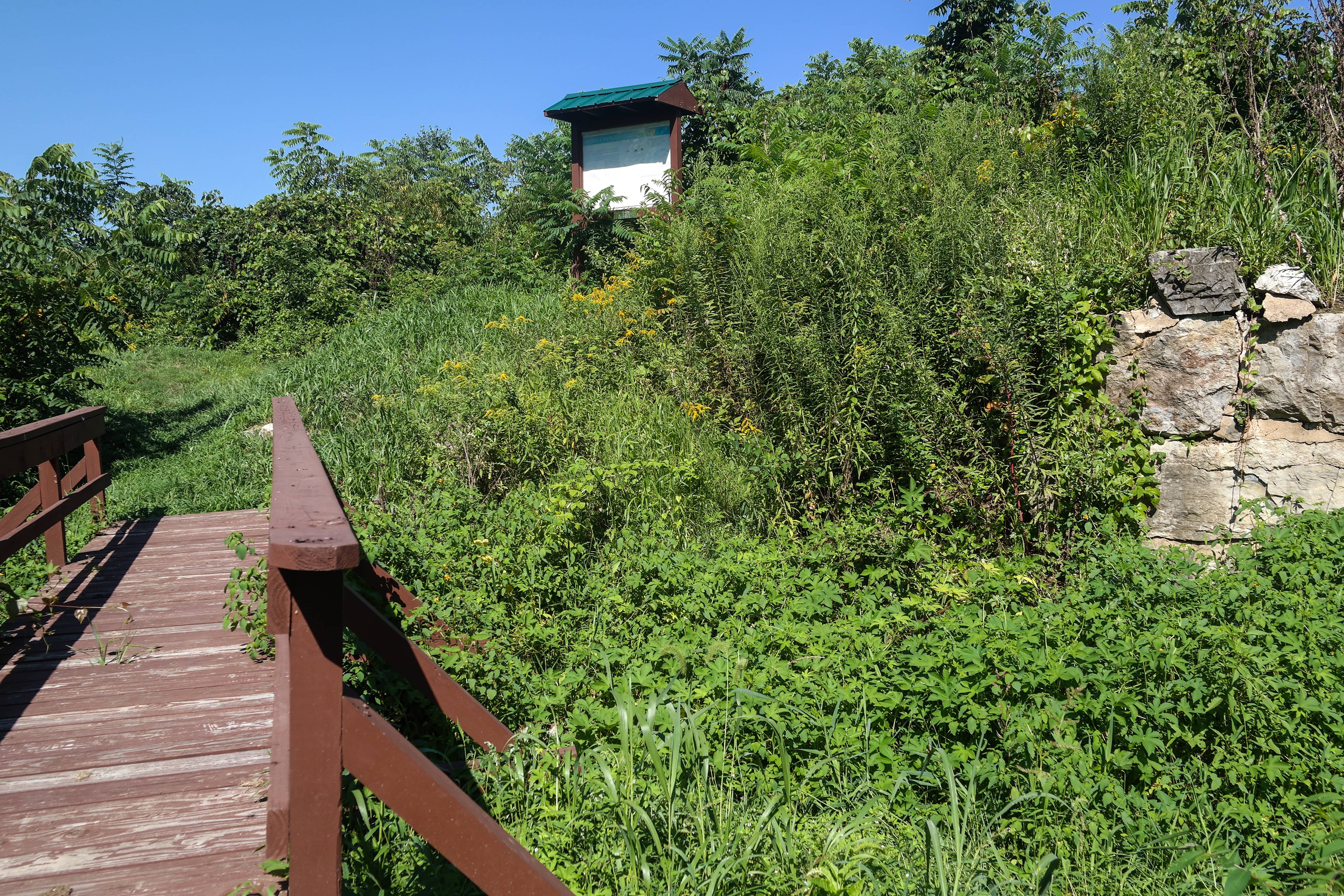
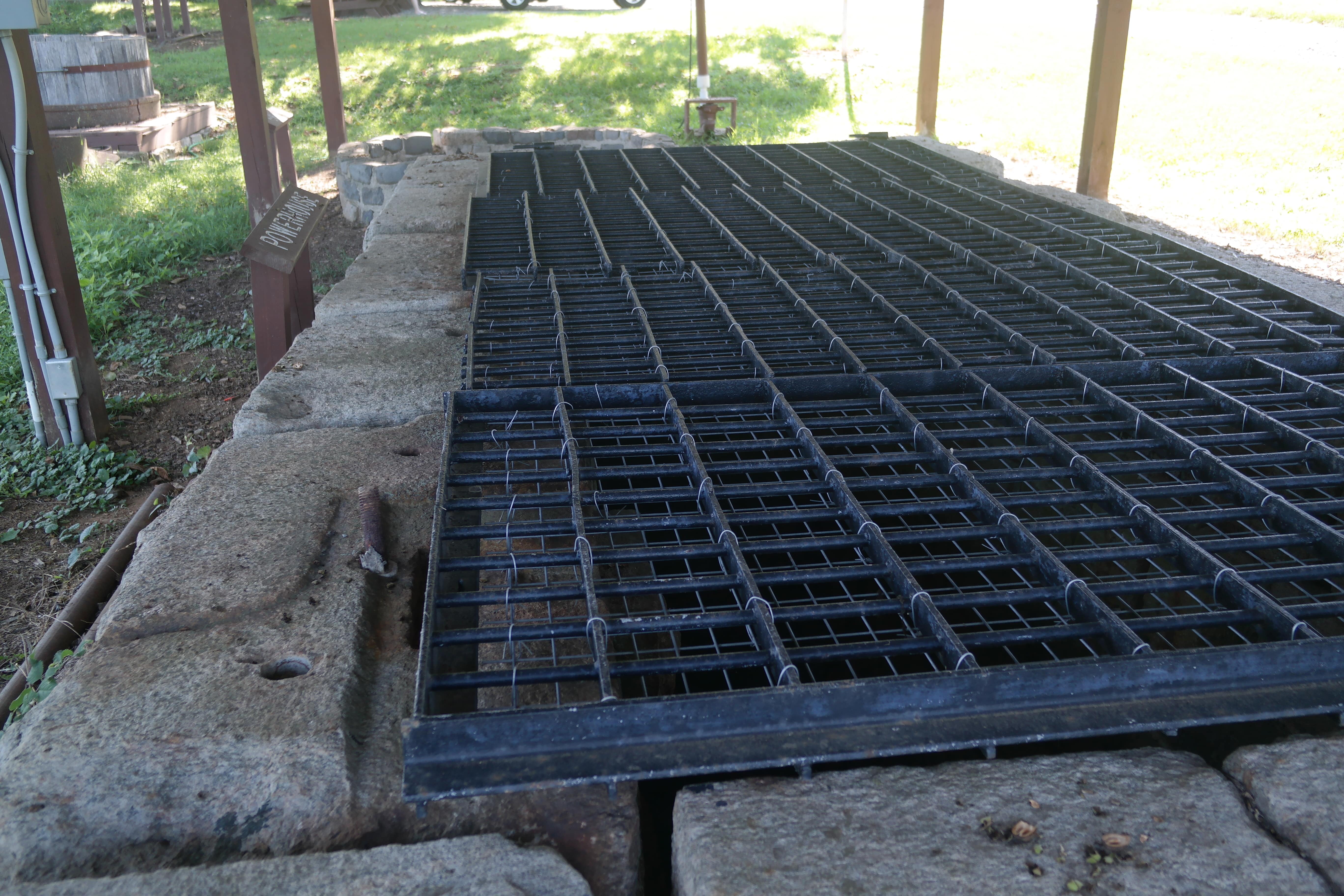
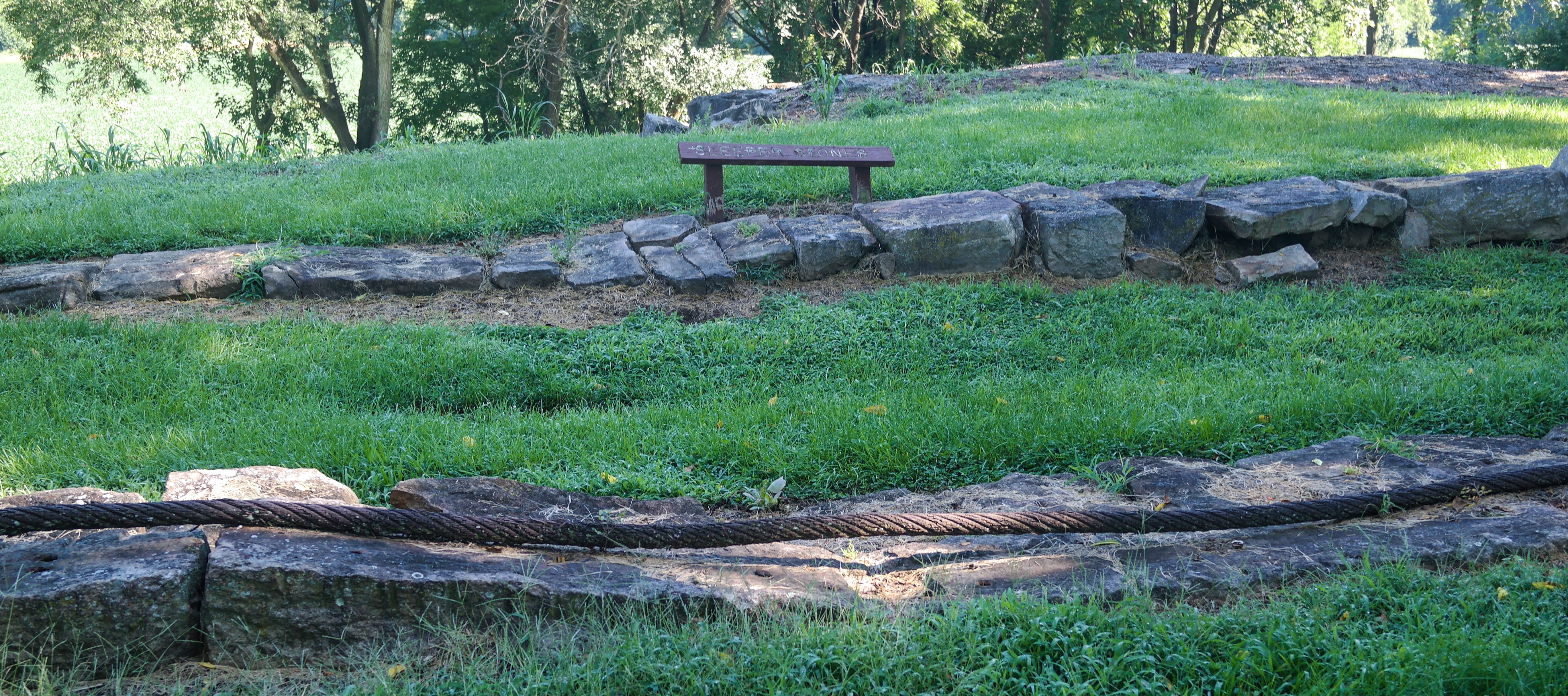
The Morris Canal approaches the top of Plane 9 West from across the cornfields to the east. The water in the canal backed up against the summit of the plane and was channeled into the timber head race, which carried it to the powerhouse where it was used to spin the scotch reaction turbine. The rails of the inclined plane, set on sleeper stones to keep them anchored in place, came over the same summit before continuing down into the water of the canal. The wire rope that pulled the cradle cars also came over the summit of the plane, riding on sheave wheels to keep them from dragging on the ground. A stone hearth with a large cauldron was situated at the top of the hill to keep tar molten. When a boat came up the incline, water could leak out the same holes where water leaked in while it was in the water. The tar was used to patch the leaking boats as well as lubricate the wire rope as it went by. Lines of solidified tar are still present under the grass from where it dripped off the passing wire rope. The vertically articulated cradle car would bend over the top of the plane before descending down into the upper level of the canal, which is 100-feet above the lower level at Plane 9 West. The towline was thrown to the mule driver and the boat was untied from the car. When the boat began to float the mules would pull the boat off the cradle car and on to the next inclined plane in Stewartsville. Boats going the other way would reverse the process. Because Plane 9 West was a double inclined plane there were two cradle cars in fixed positions on the wire rope circuit. When one cradle car was in the upper level of the canal the other would be in the lower level of the canal. A boat could be coming up as another was riding down. They would pass each other halfway. Somewhere under the ground at the top of Plane 9 West evidence of the original waterwheel-powered, lock plane undoubtedly survives.